5 Signs Your North Jersey Home Has Hard Water – and What to Do About It
You clean the shower door, polish the faucets, and unload the dishwasher – only to find cloudy glasses, white spots, and chalky buildup returning a few days later.
For many North Jersey homeowners, the problem is not the cleaning product. It may be the water itself.
Hard water contains elevated levels of naturally occurring minerals, primarily calcium and magnesium. It is generally not considered a health concern, but it can create noticeable problems throughout a home, including mineral deposits on fixtures, poor soap performance, and scale inside water-using appliances.
Here are five common signs that your home may have hard water… and what you can do about it.
What Is Hard Water?
Water becomes hard as it moves through soil and rock and picks up dissolved calcium and magnesium. The amount of hardness depends on the geology and water source serving a particular home.
Water hardness is commonly measured in milligrams per liter, parts per million, or grains per gallon. The U.S. Geological Survey generally classifies water as:
- Soft: 0–60 mg/L
- Moderately hard: 61–120 mg/L
- Hard: 121–180 mg/L
- Very hard: More than 180 mg/L
Parts of northern New Jersey are particularly susceptible to hard groundwater because of the region’s geology. The U.S. Geological Survey reports that water in the Newark Group and Valley and Ridge aquifers is generally hard, with hardness levels exceeding 120 mg/L in many areas. That does not mean every North Jersey home has hard water, but it makes property-specific testing worthwhile.
1. White Spots on Glasses, Faucets and Shower Doors
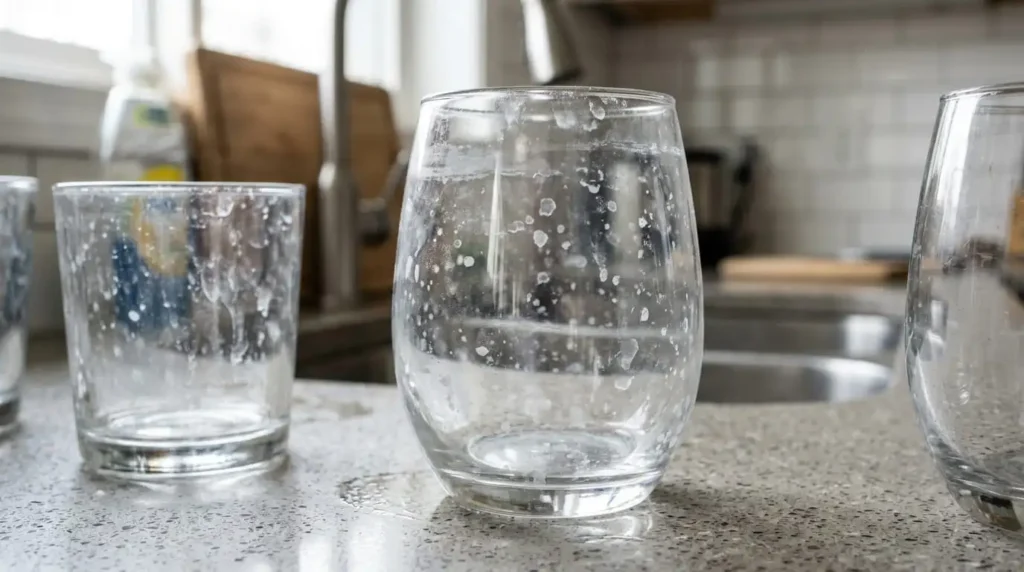
One of the most visible signs of hard water is a white, chalky film on:
- Drinking glasses
- Faucets and handles
- Shower doors
- Tile and grout
- Coffee makers and kettles
- Stainless-steel sinks
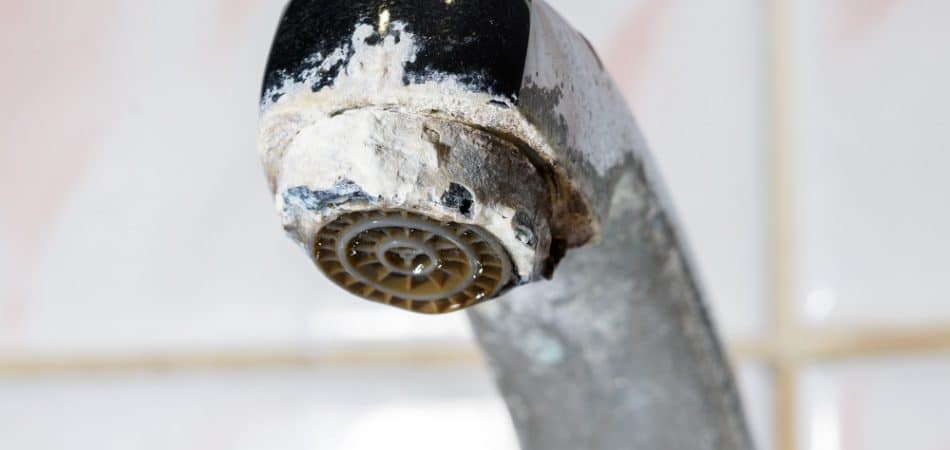
These marks are typically left behind when water evaporates and the dissolved minerals remain on the surface. You may be able to remove them with an appropriate descaling product, but they will continue to return as long as the underlying hardness remains.
Occasional water spots are normal. Persistent spotting throughout the home, particularly when accompanied by buildup around showerheads and faucet aerators, is a stronger indication that the water should be tested.
2. Soap and Shampoo Do Not Lather Easily
Hardness minerals interact with soap, making it more difficult to create a rich lather. You may notice that you need more hand soap, shampoo, dish detergent or laundry detergent than expected.
Hard water can also leave a film or sticky feeling after washing. The EPA notes that hard water may require more soap to lather and can contribute to greater soap-scum buildup on surfaces.
Using more soap may temporarily compensate for the problem, but it does not remove the hardness minerals. It may also create additional residue that must be cleaned from sinks, tubs and shower walls.
3. Your Skin or Hair Feels Dry or Coated
Some homeowners describe their skin as dry, sticky or coated after showering in hard water. Hair may feel dull, heavy or more difficult to rinse.
This does not necessarily mean the water is unsafe. Hardness is generally considered an aesthetic and household-maintenance issue rather than a drinking-water health concern. However, mineral deposits and soap residue can affect how water feels during bathing.
Skin and hair concerns can have many causes, so this sign alone does not confirm hard water. When it appears alongside spotting, scale and poor soap performance, testing can help determine whether hardness is contributing to the problem.
4. Clothes and Linens Feel Stiff or Look Dull
Hard water can make laundry detergent less effective and leave mineral residue on fabrics. Homeowners may notice:
- Towels that feel rough or stiff
- White clothing that appears gray or dull
- Colors that lose their brightness
- Detergent residue after washing
- Clothing that requires extra detergent or additional rinsing
The EPA reports that hard water can deposit abrasive minerals on clothing and linens during washing, potentially affecting their appearance and usable life.
Before assuming the washing machine is failing, check whether similar mineral deposits are appearing elsewhere in the home.
5. Scale Is Building Up Inside Fixtures and Appliances
The mineral deposits you see on a faucet can also form where you cannot easily see them, including inside:
- Water heaters
- Washing machines
- Dishwashers
- Plumbing valves
- Showerheads
- Faucet aerators
- Pipes and plumbing fixtures
Over time, scale can restrict water flow and reduce heat transfer. This can make water heaters and other appliances operate less efficiently and require more frequent cleaning or service.
A single appliance problem does not prove that you have hard water. However, recurring scale, reduced flow at multiple fixtures and frequent descaling needs are good reasons to test the water.
Is Hard Water Common in North Jersey?
Water conditions can vary considerably between neighboring municipalities and even between homes in the same general area.
Some North Jersey properties receive water from municipal systems using surface water, groundwater or a combination of sources. Other homes rely on private wells. Because groundwater moves through rock and soil, its mineral content is closely connected to local geology.
Municipal-water customers can review their utility’s annual Consumer Confidence Report and use the New Jersey Department of Environmental Protection’s Drinking Water Viewer to learn more about their water system and reported testing results.
A utility report is useful, but a test performed at the home provides the clearest picture of the water entering that particular property.
What Can Homeowners Do About Hard Water?
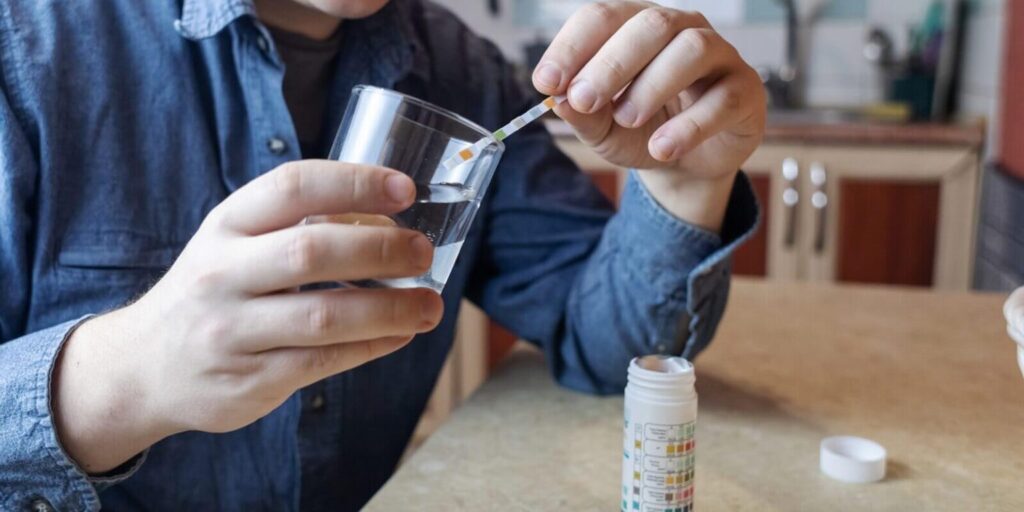
1. Test the water
Begin with an actual hardness measurement rather than relying only on stains or how the water feels.
Basic test strips can provide an initial indication. A professional test can confirm the hardness level and identify other conditions that may require different treatment.
2. Clean fixtures and aerators
Remove and clean faucet aerators and showerheads that have visible scale. Use cleaning products that are appropriate for the fixture material and follow the manufacturer’s instructions.
This can improve water flow, although it will not prevent the deposits from returning.
3. Review any existing water softener
Some homes already have a softener that is bypassed, improperly programmed, out of salt or no longer operating correctly.
Check the salt level, look for error messages and confirm that the system is not in bypass mode. Avoid changing technical settings until the incoming hardness and equipment capacity are known.
4. Consider a properly sized water softener
Most residential water softeners use ion exchange. The system captures calcium and magnesium and exchanges them for sodium or potassium ions.
The system should be sized and programmed based on:
- Tested water hardness
- Household water consumption
- Number of residents
- Plumbing flow requirements
- Equipment capacity
- The presence of iron or other water conditions
An oversized or poorly programmed system may use more salt and water than necessary. An undersized system may regenerate too frequently or allow hard water through before the next regeneration.
A Water Softener Is Not the Same as a Water Filter
One common misconception is that a water softener removes every possible water-quality concern.
A softener is designed primarily to reduce calcium and magnesium hardness. It does not typically treat unrelated contaminants, taste, odor, chlorine, sediment, PFAS or microbiological concerns. The EPA recommends confirming that a softener actually addresses the condition present before installing one.
Similarly, a standard whole-house water filter may reduce sediment, chlorine or other targeted substances but may not soften the water.
Testing should determine whether your home needs a softener, a filtration system, drinking-water treatment or a combination of solutions.
Get the Water Tested Before Choosing a System
Hard water is frustrating, but the solution should not begin with guessing or automatically installing the largest available system.
At Niagara Water Conditioning Co., we begin by looking at the water conditions, the household’s needs and any existing equipment. We can then explain the available options, including servicing an existing system or considering a new water softener installation.
Niagara Water Conditioning has served homeowners throughout North and Central New Jersey since 1963. Contact us to arrange a water test or discuss recurring scale, hard water stains, soap residue or other water-quality concerns in your home.